Our Future Developments
Powering Our Community - Meeting Our Customers' Energy Needs
Our team is proud to be part of our community, and we are committed to delivering safe and reliable electricity that you can depend on. We need to continue the maintenance and upgrade of the electricity network to achieve this. That includes replacing ageing equipment, meeting safety standards, and preparing for the needs of our region to ensure that electricity is there when we all need it. If we don't do this work now, we risk falling behind and facing even greater costs later.
So here’s what we are focusing on for the next decade:
- Network renewals
Replacing ageing assets that are reaching end of their serviceable life, at the most cost-effective time. - Increasing Capacity
Being able to deliver electricity in future as more businesses and consumers switch to energy from the grid. - Growing Resilience
Ensuring the distribution network is built to be resilient in extreme weather conditions. - Considered Investment
Asset investments and renewals are happening worldwide, there is no better time to keep pace with the region’s needs than now.
Main projects
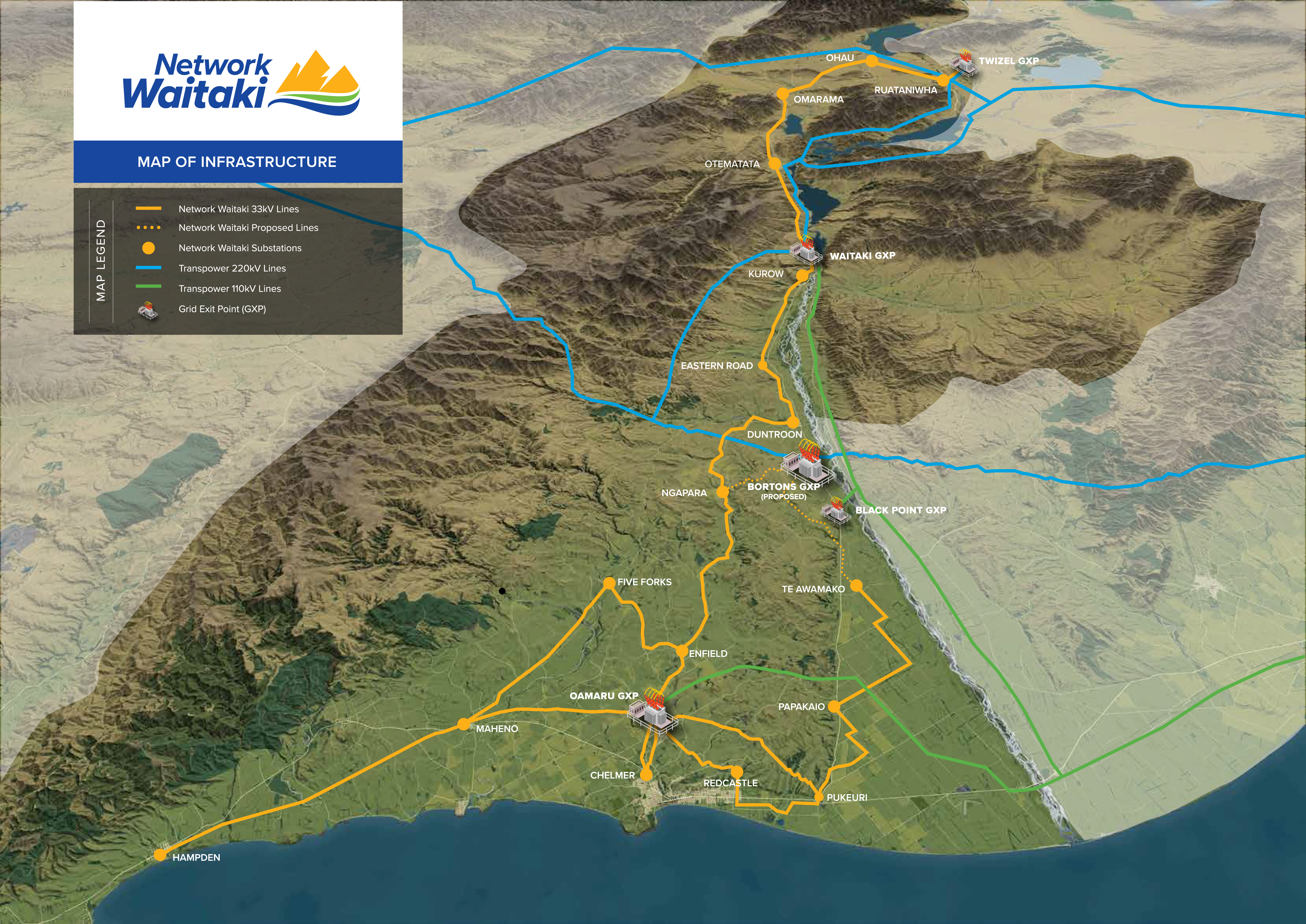
New North Otago Grid Exit Point (GXP)
The existing connection to the national grid at Ōamaru (known as a GXP) is nearing it's capacity and cannot meet our region's future energy needs on it's own. We are planning to build a new connection to the national grid by around 2030, to ensure there is enough electricity to support homes, businesses, and future growth opportunities well into the future. We will also upgrade parts of our electricity network over the coming years so power from the new connection can be delivered across the region.
How will we fund the project?
All distribution companies across New Zealand face the challenge of ‘what to do’ with ageing assets built between the 1950s-1980s.
Historically we have had some of the lowest prices despite being a smaller, mostly rural area. We have taken on debt for the first time over the last few years to help fund network upgrades. Our year-end debt position last year was $21m. Debt to Total Assets ratio remains low at only 12%.
We are taking a responsible approach to funding the investment over the next 10 years, aiming to strike a balance between borrowing and the pricing we pass on to customers.
The level of debt is projected to step up to $40m over the next decade. But we can’t fund it on borrowing alone, some of the costs to ensure our networks’ resilience and capacity for future growth in the region need to be passed through to customers.
This approach of a combination of borrowing and pricing effectively spreads the cost to energy users who will benefit from this work over a 30-year period, rather than asking customers today to pay the full cost each year of the 10-year plan through increases in pricing alone.
